

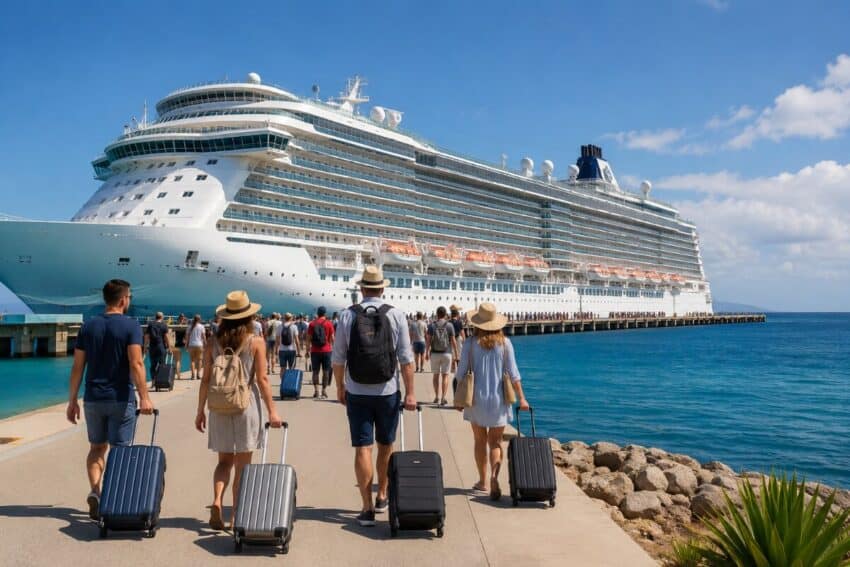
For decades, the default assumption among Australian holidaymakers was that a “proper” cruise meant leaving the country — the Mediterranean, the Caribbean, a South Pacific island loop. That assumption has been quietly unravelling. A growing number of travellers are discovering that an Australian cruise can deliver scenery, wildlife, and a sense of genuine discovery that rivals anything available overseas, without the long-haul flights, jet lag, or currency conversions.
This shift isn’t just anecdotal. Coastal cruising within Australia has become one of the more searched categories in domestic travel, driven by a combination of post-pandemic preference for local travel, rising interest in sustainable tourism, and a simple realisation: much of Australia’s most dramatic coastline is barely visited, let alone cruised.
Australia’s Coastline Is Bigger Than Most People Realise
It’s easy to underestimate the scale of what’s on offer. Australia’s coastline stretches for roughly 34,000 kilometres, and huge sections of it — particularly across the northern and western regions — remain largely inaccessible by road. These are areas where the only realistic way to see the landscape up close is by water, which is precisely what makes them so well suited to small-ship cruising.
Unlike cruise routes overseas that often link major cities and established ports, Australian coastal cruise itineraries tend to prioritise natural features over urban stops: tidal rivers, isolated reef systems, ancient rock art galleries, and stretches of coastline that have barely changed in thousands of years. The absence of large-scale infrastructure is, counterintuitively, the main attraction.
Why Coastal Cruising Suits the Australian Landscape So Well
Several features of the Australian coast make it particularly well matched to expedition-style cruising rather than conventional cruise formats:
- Extreme tidal ranges in parts of the north create dynamic, ever-changing coastal scenery
- Shallow estuaries and mangrove systems that only smaller vessels can navigate
- Marine biodiversity including migratory whale corridors and extensive reef systems
- Remote Indigenous cultural sites, many of which are only accessible by boat with appropriate permissions and guides
- Minimal existing tourism infrastructure, which keeps many of these areas feeling genuinely untouched
Where an overseas cruise itinerary might revolve around historic city ports, an Australian coastal route revolves around geology, tide, and wildlife — a fundamentally different, and for many travellers, more compelling structure.
Comparing the Experience to Overseas Cruising
It’s a fair question: why choose a domestic coastal cruise over a well-established international route? A few points tend to come up consistently among travellers who’ve done both.
First, there’s the logistics. No long-haul flights, minimal time-zone adjustment, and none of the currency or travel-document complications that come with international departures. Second, there’s authenticity of access — Australian coastal routes typically involve far fewer fellow tourists per site than heavily trafficked international ports, simply because the destinations themselves are harder to reach. Third, seasonality works differently; travellers can often plan around Australia’s dry season for optimal conditions without needing to coordinate around European or Caribbean peak periods.
None of this is to say overseas cruising doesn’t have its own strong appeal — particularly for those seeking historic architecture, established food and wine regions, or a broader spread of countries in one trip. But for travellers prioritising nature, remoteness, and wildlife, domestic coastal cruising increasingly holds its own.
What to Expect Onboard
Coastal cruise vessels operating in Australian waters tend to be smaller than international ships, generally carrying somewhere between two dozen and a couple of hundred passengers depending on the operator and region. This scale allows for a level of flexibility that larger ships can’t match — itineraries can shift in response to weather, tidal windows, or an unexpected wildlife sighting.
Days typically combine time on the water (Zodiac or tender excursions, guided snorkelling, kayaking) with time ashore (short hikes, cultural site visits, wildlife spotting). Onboard, naturalists or expedition guides usually run evening briefings covering the next day’s plan and the natural or cultural history of the area being visited. It’s a markedly different rhythm to a conventional cruise itinerary built around fixed port days and onboard entertainment schedules.
Regional Highlights Worth Knowing About
Several stretches of Australian coastline have become particularly well known among those researching Australian coastal cruise options:
- The north-west coast, known for extreme tides, ancient gorges, and significant rock art
- Tropical reef regions offering warm-water snorkelling and diving alongside coastal exploration
- Southern coastal waters, where cooler currents bring different marine wildlife and dramatic, rugged scenery
- River systems that cut deep into the interior, navigable only during specific tidal windows
Each region offers a genuinely different character, which means the choice of itinerary matters as much as the choice of vessel.
Timing a Coastal Cruise Around the Seasons
Much of Australia’s most dramatic coastal cruising happens within a defined seasonal window, particularly in the tropical north, where the dry season offers calmer conditions and more reliable access to remote sites. Outside this window, weather patterns can make certain excursions impractical or unsafe. Anyone planning ahead should check seasonal timing carefully against the specific region they’re interested in, since conditions vary significantly along the length of the coastline.
Questions Worth Asking Before Booking
A well-run coastal cruise operator should be able to answer the following clearly:
- How is the itinerary adjusted if weather or tides change?
- What size are the excursion vessels, and how many passengers do they carry per outing?
- Are naturalist or expedition guides qualified in the specific region being visited?
- What’s included in the fare versus offered as an optional extra?
- How does the operator manage environmental impact in sensitive coastal areas?
These questions tend to reveal a lot about the quality and seriousness of the operation, particularly around environmental management — an increasingly important factor for travellers choosing between operators.
A Genuinely Local Alternative Worth Considering
There’s a strong argument that Australians have, for a long time, overlooked their own coastline in favour of overseas cruise destinations that are, in truth, less remarkable in several respects. Coastal cruising within Australia offers landscapes and wildlife encounters that genuinely compete on the world stage, delivered with none of the long-haul travel burden. As awareness of what’s actually available domestically continues to grow, it’s likely that coastal cruising will keep gaining ground as a serious, rather than secondary, choice for Australian travellers.
