

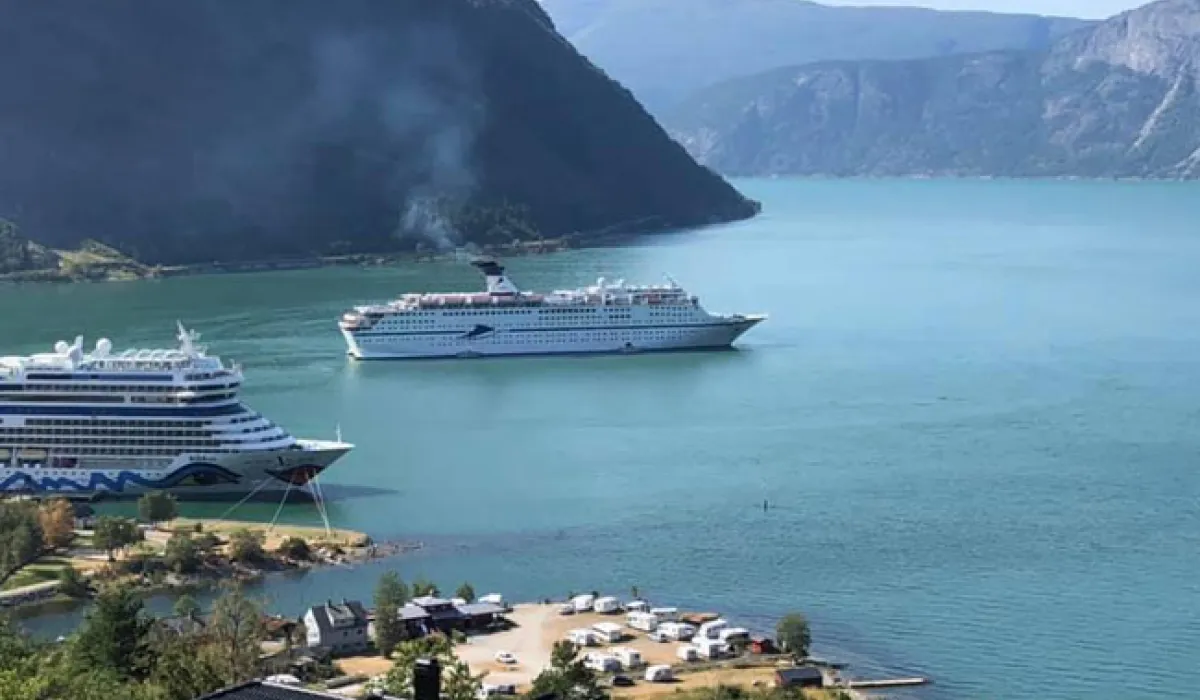
Pier runners are a fixture of modern cruise culture. From the comfort of pool decks and private balconies, thousands of passengers routinely gather to watch breathless stragglers sprint down concrete docks as horns blast and gangways pull away. Online, these videos generate millions of views and lighthearted amusement. Standing on that concrete dock as the vessel pulls away, however, is an entirely different reality.
A cruise ship is not an oversized floating hotel that can hold an elevator while you finish a conversation; it is a massive commercial maritime vessel governed by strict international treaties, tight harbor master schedules, expensive berthing contracts, and maritime law. When the scheduled all-aboard time passes and you are not on board, a rapid, standardized administrative sequence begins.
Here is an unvarnished look at what actually unfolds behind the scenes, both on the vessel and at the pier, when a cruise ship departs without you.
The Ticking Clock: Ship Time Versus Port Time
Most missed departures do not stem from traffic accidents or medical emergencies; they happen because of simple chronological confusion. One of the most common mistakes travelers make is failing to distinguish between ship time and local island or port time.
Cruise vessels frequently remain synchronized with the time zone of their embarkation port throughout the entire itinerary to maintain operational consistency for entertainment schedules, engine room rotations, and dining services. A ship sailing out of Miami may visit an island in the Eastern Caribbean or Central America that observes a completely different time zone or does not participate in daylight saving time. If your smartphone automatically switches to the local cellular network tower and updates its clock, you might believe you have ninety minutes to spare when the gangway is already being unbolted.
Cruise lines emphasize the all-aboard time, which is fundamentally different from the departure or sailaway time. The all-aboard deadline is almost always set forty-five to sixty minutes before the ship actually casts off. That window is not built-in buffer time for tardy guests; it is required by local port authorities and the ship’s navigation officers to conduct mandatory security counts, secure shore power lines, finalize passenger manifests, and clear customs before the local harbor pilot boards.
The Onboard Protocol Minutes Before Lines Are Cast
When the gangway computer scans your cruise card upon exit in the morning, your status switches to shoreside. As the all-aboard deadline approaches, the ship’s automated security system generates an alert for every passenger who has not scanned back into the vessel.
Once that deadline expires, the guest services team initiates a rapid-response procedure:
The ship’s public address system will repeatedly broadcast your name, asking you to contact guest services immediately. This step confirms that you are not simply asleep in a library nook or lounging in a quiet public lounge where you may have boarded without being logged.
While the announcements echo through the corridors, a security supervisor and a member of the guest relations management team enter your stateroom. They are not rummaging through your personal luggage looking for laundry. Their sole mission is to open the stateroom electronic safe using a master override code. They search for primary identification: passports, government identity cards, emergency medications, credit cards, and any spare mobile devices left behind.
If the safe contains your travel documents, the staff places them into an envelope. That envelope is carried down to the gangway security station and physically handed over to a designated shoreside official before the final gangway ramp is withdrawn. Once that handoff takes place and the harbor pilot gives the order to release lines, the ship’s obligation to wait ends.
Cruises run on tight tidal windows, speed-fuel optimization curves, and severe port fees. Berthing past a designated departure slot incurs steep hourly fines from port authorities, creates logistical gridlock for incoming cargo or container traffic, and risks missing the next port’s scheduled pilot window. The captain will not delay three to five thousand passengers for two travelers who misjudged their afternoon.
The Critical Role of the Port Agent
If you arrive at an empty pier, your very first point of contact is the port agent.
The port agent is not a direct cruise line employee in the traditional sense, but an independent local maritime liaison contracted by the cruise corporation to handle shore-side logistics, port authority coordination, vendor supplies, and passenger emergencies. When the gangway is detached, the ship leaves the port agent standing on the pier or accessible nearby.
If the ship’s security team managed to retrieve your passport and credit cards from your cabin safe, the port agent will have that envelope waiting for you. If you kept your passport in a backpack on the ship or left it in a suitcase under the bed, the port agent will inform you that your documents are currently sailing toward the next destination.
The port agent serves as your primary navigational lifeline on foreign soil. They can connect you with local immigration authorities, provide details on nearby lodging, direct you toward reputable transport, and confirm the ship’s scheduled arrival window at its next port of call. What the port agent will not do, however, is pay for your expenses. They do not hand out travel vouchers, book complimentary hotel rooms, or charter boats on the cruise line’s dime. Their responsibility is administrative facilitation, not financial sponsorship.
The Legal Complexities: Immigration, Visas, and Maritime Statutes
Finding yourself stuck on a dock involves far more than ruined vacation plans; it can quickly transform into an international immigration violation.
When you sail into a foreign port on a cruise ship, you enter under a blanket maritime transit manifest negotiated between the cruise operator and the host country’s government. You generally do not pass through a traditional customs border booth or receive an entry stamp in your passport. If the ship departs without you, your legal status changes abruptly. You are now present on foreign soil without formal entry processing, often without an entry stamp, and potentially without an approved tourist visa.
The severity of this issue compounds exponentially if your passport is still in your stateroom. Without proof of citizenship or legal identification, you cannot board a commercial flight, cross an international land border, or sometimes even check into a licensed hotel. In this scenario, your immediate destination becomes the nearest embassy or consulate of your home country to obtain an emergency travel passport before any travel arrangements can be booked.
The Passenger Vessel Services Act (PVSA)
For cruises departing from United States ports, there is an additional federal complication that routinely blindsides American travelers: the Passenger Vessel Services Act of 1886.
The PVSA requires that foreign-flagged passenger ships—which accounts for nearly every major cruise vessel sailing today—cannot transport passengers directly between two different US ports without stopping at a designated distant foreign port.
If you miss your ship in a US port such as Key West, Florida, you cannot simply hop on a domestic flight to catch the ship at its next scheduled stop in Port Canaveral or Charleston. Doing so violates federal cabotage law. If you rejoin the vessel at a subsequent US port without meeting the statutory foreign port requirement, the cruise line will be assessed a severe fine per passenger by US Customs and Border Protection, a penalty the cruise contract explicitly passes directly onto you.
Catching Up Versus Going Home: Evaluating Your Options
Once you are standing with the port agent and taking stock of the situation, you face a fork in the road: rejoin the ship down the line or scrap the remainder of the itinerary and travel home.
Rejoining the Ship at the Next Port
Catching up with the ship sounds straightforward in theory, but in practice, it is often impractical or prohibitively expensive.
First, you must confirm that the cruise line permits mid-voyage embarkation at the upcoming port. Some Caribbean island nations, as well as several European and South American destinations, enforce strict customs laws that prohibit passengers from joining a voyage once it has begun.
Second, consider the geography. If the ship’s next stop is a small island with limited airfield access, you may need two connecting regional flights, a puddle-jumper charter, and an overnight stay just to reach the harbor before the ship drops anchor.
Third, evaluate the port infrastructure. If the next destination is a tender port—where the ship anchors offshore and transports guests to land via small boats—captains frequently prohibit stranded guests from boarding via tender due to safety and immigration clearance protocols. If the port requires a tender, you may travel hundreds of miles only to be turned away at the water’s edge.
Returning Directly Home
In the vast majority of cases, returning home is the smarter, more economical decision. If you do not possess valid international travel documents, your journey home will require coordinating through your home nation’s embassy, securing an emergency passport, and booking one-way commercial flights at last-minute market rates.
What Happens to Your Belongings?
If you cannot or choose not to rejoin the ship, your luggage remains on board. The cruise staff will eventually inventory, pack, and store your cabin’s contents after you officially declare yourself absent for the duration of the voyage.
Your bags will travel to the ship’s final disembarkation port. From there, you have two options: arrange to meet the vessel on its turnaround day to collect your luggage directly, or authorize the cruise line to ship your bags to your home address via international freight carrier. If you choose the freight route, all shipping fees, customs tariffs, and delivery surcharges are charged directly to the credit card linked to your onboard folio.
Financial Liability: Who Pays for What?
When a traveler misses a cruise departure, financial liability is dictated by how the shore excursion was booked and the specifics of your travel insurance policy.
Independent Excursions Versus Ship-Sponsored Tours
The single greatest protection against missing a cruise departure is booking your shore excursion directly through the cruise line.
Cruise lines guarantee that if an official, cruise-sponsored excursion runs late due to a flat tire, mechanical bus failure, or blocked highway, the ship will either wait for that tour group to return or the cruise line will cover the full cost of transport, meals, and lodging required to rejoin the vessel at the next port. If a bus carrying fifty people on a ship-sponsored Mayan ruins tour gets caught behind a fuel tanker accident, the captain will adjust port departure times accordingly.
If you book an independent excursion through a local vendor or explore the port by hiring a private taxi, you assume one hundred percent of the risk. If a private tour operator has engine trouble thirty miles upcountry, the cruise line carries zero legal or financial obligation to delay the voyage or reimburse your expenses.
The Limits of Travel Insurance
Many passengers believe that having comprehensive travel insurance automatically covers any missed connection. That is a dangerous assumption.
Standard travel insurance policies will reimburse costs for missed port departures only if the delay was caused by a covered peril explicitly defined in the policy contract. Covered perils routinely include verified medical emergencies requiring hospitalization, severe certified weather disruptions, or public transit strikes.
Insurance policies almost uniformly exclude coverage for personal negligence, poor time management, alcohol consumption, misunderstanding time zones, or delays caused by unvetted independent tour operators. If you lose track of time at an open-air beach bar and miss the all-aboard call, your insurance provider will deny the claim.
What to Do the Moment You Realize You Are Stranded
If you arrive at the dock and see open water where your cruise ship was anchored, execute these immediate steps to mitigate the damage:
-
Locate the Port Agent Immediately: Do not leave the secure perimeter of the port facility to wander into town. Ask security guards, dock masters, or terminal gate personnel for the assigned port agent or ship liaison.
-
Retrieve Your Emergency Documents: Obtain the envelope containing your passports, cards, or medications that ship security handed off to the port agent.
-
Contact the Cruise Line’s Emergency Assistance Desk: Call the twenty-four-hour emergency dispatch number listed on the back of your cruise card or stored in the cruise line’s smartphone app. Inform them of your situation and status so they can coordinate with the ship’s guest relations manager.
-
Determine the Viability of Rejoining: Ask the cruise line representative directly if local maritime laws and immigration rules permit you to board at the next port, and confirm whether that port utilizes docks or tenders.
-
Contact Your Travel Insurance Provider: Open an active claim immediately. Ask the representative to clarify what documentation, police reports, or travel receipts are required if your delay falls under a covered event.
-
Book Travel and Lodging: If you lack documents, proceed directly to the nearest consulate or embassy. If you have your passport, book commercial travel either to the next approved port or back to your home city.
Missing a cruise ship turns a relaxing ocean vacation into an abrupt lesson in international logistics and maritime law. Ships run on rigorous operational schedules for thousands of guests at a time. The dock will empty, the lines will be cast, and the vessel will head to sea. Keeping your watch locked to ship time, carrying your passport ashore, and returning to the gangway with an hour to spare are the only safeguards that guarantee you remain a passenger on the ship rather than an internet video watched by everyone on board.
