

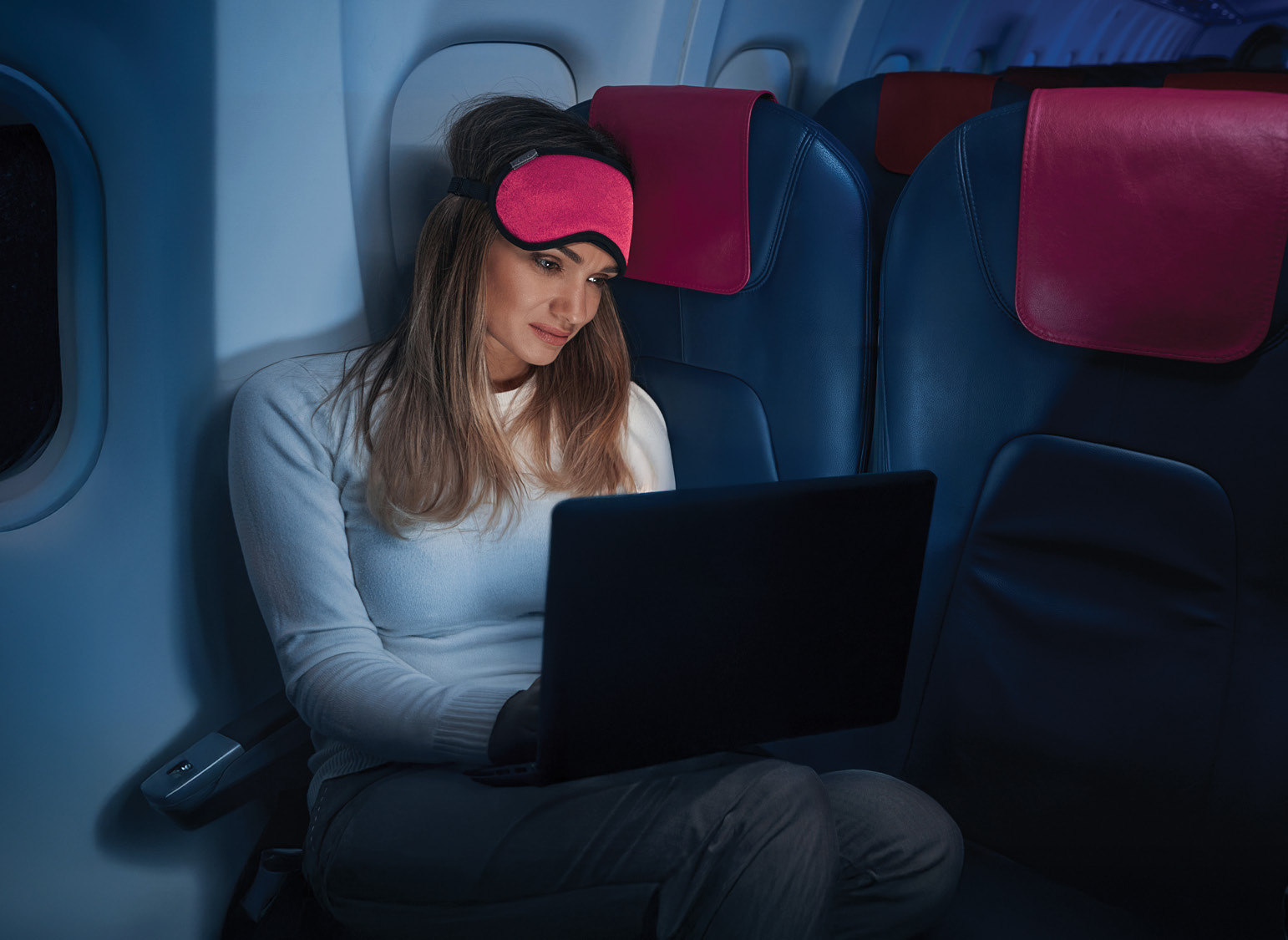
Crossing half a dozen time zones in half a day is a triumph of modern aviation, but your physiology is entirely unequipped for it. Rapid transmeridian travel tears your internal twenty-four-hour biological rhythm away from the solar cycle at your destination. The resulting disorientation, brain fog, gastrointestinal distress, and midnight wakefulness are not mere exhaustion. They are the physiological symptoms of total circadian desynchronization.
While you cannot instantly flip your biological clock with a switch, you can systematically nudge, accelerate, and entrain your body’s internal pacemakers. By synchronizing your master clock and peripheral metabolic systems through light, meal timing, and behavior, you can reduce what is normally a week of sluggish misery into a smooth, forty-eight-hour transition.
The Chronobiology of Jet Lag: Why Your Body Rebels
Deep inside the hypothalamus sits the suprachiasmatic nucleus, a master clock composed of roughly twenty thousand neurons. This master pacemaker coordinates virtually every cyclical process in your body, including core body temperature fluctuations, cortisol release, blood pressure, digestion, and melatonin secretion.
When you cross multiple meridians rapidly, the external cues of your environment—such as sunrise, sunset, and social activity—abruptly decouple from this master timer. Your brain may register that it is noon in London, but your liver, gut, and adrenal glands are still operating on Chicago time, preparing for deep rest.
The direction of your travel dramatically influences how severe this mismatch feels:
-
Flying East (Phase Advance): Traveling east forces you to shorten your day, requiring you to fall asleep earlier and wake up earlier. Because the human intrinsic circadian period naturally runs slightly longer than twenty-four hours—averaging roughly twenty-four hours and twelve minutes—compressing your internal cycle is biologically unnatural and substantially harder to achieve.
-
Flying West (Phase Delay): Traveling west lengthens your day. Extending wakefulness aligns far more naturally with your body’s slight tendency to drift forward, making westward travel markedly easier for most travelers to absorb.
Understanding this directional asymmetry changes your entire strategy. Eastbound journeys require aggressive early preparation, whereas westbound flights demand stamina and late-day light exposure.
Pre-Flight Adjustments: Shifting Your Clock in Advance
If you wait until your flight touches down to address jet lag, you guarantee several days of compromised alertness. For long-haul trips crossing five or more time zones, a three-day pre-travel ramp can dramatically cut your arrival recovery time.
Begin shifting your sleep and wake schedule by thirty to sixty minutes each day leading up to your trip. If you are heading east, wake up thirty to forty-five minutes earlier each morning and shift your bedtime earlier by the same increment. Immediately flood your eyes with bright light upon waking to signal an earlier morning to your master clock.
If you are flying west, do the reverse. Delay your bedtime by an hour each night and push your morning wake-up time later, exposing yourself to bright indoor or outdoor light in the late evening.
Above all, never attempt to “tire yourself out” by deliberately depriving yourself of sleep the night before a major flight. Chronic sleep deficits spike systemic inflammation and elevate cortisol, which severely impairs your brain’s ability to adapt to new environmental cues. Board your flight well-rested so your central nervous system retains the plasticity needed to reset.
Mastering Light: The Most Potent Circadian Lever
Light is your primary zeitgeber, the German term chronobiologists use for environmental time givers. Specialized intrinsically photosensitive retinal ganglion cells in your eyes detect blue-wavelength light and send immediate signals to the hypothalamus to suppress melatonin and raise alertness. Controlling your photic exposure is the single most powerful intervention at your disposal.
The Eastbound Protocol: Advancing the Clock
When traveling east, your objective is to advance your circadian rhythm so that nightfall arrives earlier.
-
Seek morning light: After landing, get outside into direct, unfiltered natural daylight as early as possible. Even on an overcast day, outdoor lux levels dwarf indoor office lighting. Natural light suppresses lingering nighttime hormones and anchors your new morning.
-
Avoid late afternoon light: Light exposure in the late afternoon or early evening of your destination will delay your clock, pushing your sleep drive even later into the night. Wear dark, wraparound sunglasses or blue-blocking glasses during the late afternoon to prepare your brain for an earlier bedtime.
The Westbound Protocol: Delaying the Clock
When traveling west, your objective is to delay your circadian rhythm so you can stay awake comfortably through the extended local evening.
-
Seek afternoon and evening light: Maximize outdoor exposure during the late afternoon and early sunset hours at your destination. This keeps your alertness signals high and prevents premature evening crashes.
-
Limit early morning light: If you wake up at 4:00 AM because your internal clock thinks it is morning back home, stay in a dark, quiet room. Exposing yourself to brilliant light before dawn will reinforce your old wake time rather than nudging it forward.
Metabolic Synchronization: Using Food as an Internal Timer
While light governs the master clock in the brain, peripheral clocks in your stomach, pancreas, and liver sync primarily to nutrient intake. Eating at the wrong biological time desynchronizes your organs from your brain, leading to bloating, indigestion, and midnight hunger pangs.
To align your metabolic clocks, use strategic fasting during transit. Fasting for twelve to sixteen hours during your flight puts peripheral metabolic pacemakers into a holding pattern. When you arrive at your destination and eat a substantial meal at the appropriate local mealtime, those peripheral clocks immediately snap into alignment with local time.
The macronutrient composition of your meals matters as well:
-
High-protein breakfasts: Consume protein-dense meals featuring eggs, Greek yogurt, or lean meats upon waking at your destination. Protein promotes the synthesis of tyrosine, dopamine, and norepinephrine, priming your central nervous system for daytime alertness.
-
Carbohydrate-focused dinners: In the evening, opt for complex carbohydrates like sweet potatoes, oats, or rice. Carbohydrates stimulate insulin release, which aids the transport of tryptophan into the brain and supports downstream serotonin and melatonin production for restorative sleep.
In-Flight Logistics: Setting the Rhythm Early
Your behavioral transition begins the moment you step aboard the aircraft, not when the wheels hit the tarmac.
First, adjust your watch and phone clocks to the local time of your destination as soon as you find your seat. Mentally commit to that schedule. If it is 11:00 PM at your destination when your flight takes off, immediately prepare to rest, using an eye mask, noise-canceling headphones, and a supportive neck pillow. If it is mid-day at your destination, resist the urge to sleep, even if the airline cabin crew dims the overhead lights.
Second, aggressively manage cabin dehydration. Aircraft cabin humidity regularly drops below twenty percent, sapping water from your system faster than normal ground environments. Dehydration exacerbates headaches, brain fog, and vascular fatigue. Drink plain water or water with unflavored electrolytes consistently throughout the flight, aiming for roughly eight ounces per hour in the air.
Finally, avoid alcohol and high-dose caffeine entirely during transit. While an alcoholic beverage may produce temporary sedation, alcohol severely fragments sleep architecture, obliterates restorative REM stages, and worsens dehydration. Similarly, caffeine has a half-life of five to seven hours and a quarter-life of up to twelve hours. Consuming caffeine mid-flight or late in the day will interfere with deep slow-wave sleep once you finally reach your hotel.
Strategic Supplementation: Precision over Megadosing
Melatonin is one of the most widely used travel supplements, yet it is almost universally misused. Melatonin is not an intoxicating hypnotic or a chemical sedative; it is a chronobiotic phase-shifting agent that tells your brain that darkness has fallen.
Taking large doses of five to ten milligrams often floods your receptors, resulting in intense morning grogginess, vivid nightmares, and receptor desensitization. Instead, opt for physiological micro-doses ranging from 0.5 milligrams to 2 milligrams.
For eastbound travel, take a micro-dose roughly thirty to forty-five minutes before your target destination bedtime. This small pulse mimics natural pineal gland secretion, signaling your body to initiate its core cooling process and start sleep architecture smoothly.
Steer clear of prescription sedatives and sleeping pills unless specifically prescribed for severe situational panic. Pharmacological sedatives induce chemical unconsciousness rather than natural sleep, do nothing to reset circadian phase markers, and increase the risk of deep vein thrombosis by immobilizing you unnaturally in cramped cabin seating.
Conquering the First Day on the Ground
How you conduct yourself during the initial twelve hours on the ground determines whether you adapt in two days or struggle for an entire week.
When landing in the morning after a long journey, fatigue will peak in the early afternoon. Do not surrender to an open-ended afternoon sleep. If you collapse into bed at 2:00 PM, you will enter slow-wave delta sleep, wake up disoriented at 7:00 PM, and remain wide awake until dawn, permanently locking your circadian misalignment in place.
If the exhaustion is overwhelming, take an emergency power nap limited strictly to twenty minutes before 2:00 PM. Set two loud alarms. A twenty-minute nap clears built-up adenosine without letting your brain descend into slow-wave sleep, giving you just enough cognitive relief to push through to the evening.
Incorporate gentle physical exercise into your afternoon. A brisk thirty-minute walk, a light bodyweight workout, or swimming elevates your core body temperature and triggers the release of cortisol, both of which communicate active waking hours to peripheral tissues.
When your destination bedtime finally arrives, establish a strict sleep sanctuary. Cool the room to roughly sixty-five to sixty-eight degrees Fahrenheit, seal out all exterior light with blackout curtains, and turn off back-lit screens. If you wake up unexpectedly in the middle of the night, stay in bed in the dark. Avoid checking your work email or turning on overhead bathroom lights. Let your body rest quietly until your target wake-up time, and you will find your internal rhythm falling neatly into line with the world outside your window.
