

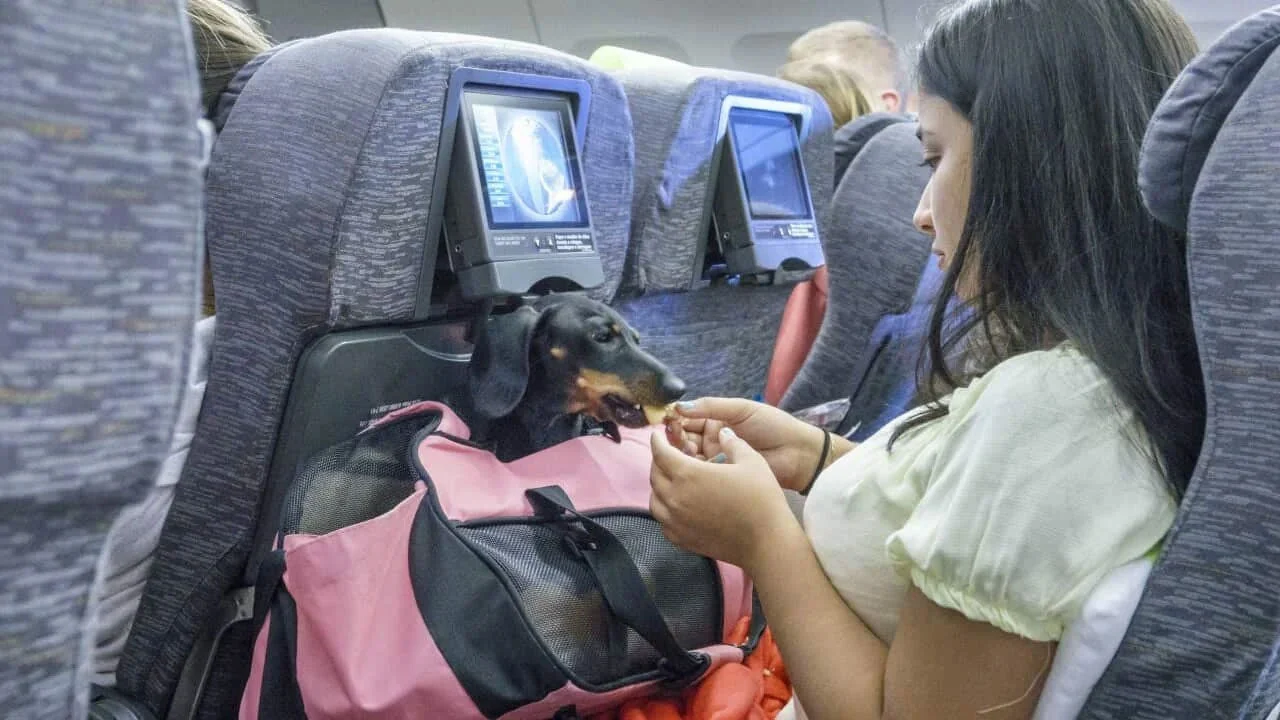
Bringing a pet into the passenger cabin turns what is often a stressful travel day into a shared adventure, sparing both you and your animal the anxiety of the cargo hold. Still, navigating airports and commercial air travel with a cat or small dog requires far more than slipping a collar on and buying a ticket. Commercial airlines enforce strict spatial limitations, airport terminals are overwhelming sensory environments, and federal safety regulations leave zero room for improvisation.
To ensure a seamless journey from curb to destination, you must plan your logistics weeks in advance. Treating the trip with meticulous care ensures your pet stays safe, comfortable, and quiet beneath the seat in front of you.
Understanding Airline Cabin Pet Policies and Space Limits
Every commercial carrier establishes its own parameters for in-cabin pets, but nearly all treat them as an allotment of your carry-on luggage. Your pet carrier replaces your personal item and must occupy the space directly beneath the seat ahead of you.
Before booking your own seat, examine the specific airline rules regarding animal travel. Most major domestic carriers cap the number of pets permitted in the cabin on any single flight, typically allowing between two and six animals across the entire aircraft. These spaces operate strictly on a first-come, first-served basis. Booking your flight online does not automatically secure a spot for your pet. You must contact the airline immediately by phone or through customer service to add the pet to your reservation and pay the one-way pet fee, which generally ranges from ninety-five to one hundred and fifty dollars.
Weight limits also vary across carriers. Most domestic airlines enforce a combined weight limit—meaning the pet plus the carrier—of roughly fifteen to twenty pounds. However, the governing metric is always visual comfort. Gate agents and flight attendants expect the animal to stand up, turn around, and lie down naturally without their back touching the top of the carrier. If an animal appears wedged into the bag, the airline reserves the right to deny boarding.
Brachycephalic breeds, such as French Bulldogs, Pugs, and Persian cats, require extra vigilance. While these flat-faced breeds are widely banned from cargo holds due to severe respiratory risks, many airlines still permit them in the cabin. If you travel with a short-snouted pet, monitor cabin temperatures closely and consult your veterinarian, as respiratory distress can escalate quickly under flight conditions.
Selecting and Sizing the Right Carrier
Your choice of carrier directly determines whether your pet settles in or spends the flight agitated. While hard-sided plastic crates offer robust structural protection, they rarely work well in passenger cabins because they lack flexibility.
Soft-sided carriers are the gold standard for in-cabin travel. Their pliable fabric allows the top and sides to compress slightly, helping the carrier slide under irregular under-seat spaces without collapsing on the pet. Aircraft interiors vary dramatically; the under-seat dimensions on a Boeing 737 differ from an Airbus A320 or an Embraer regional jet, where life vest compartments or electronic equipment boxes frequently encroach on floor space. A quality soft-sided carrier absorbs those dimensional differences with ease.
When purchasing a carrier, look for these specific functional features:
-
Multi-sided mesh ventilation: Ensure at least three sides feature durable, tear-resistant mesh to promote continuous airflow, which prevents overheating in stagnant under-seat environments.
-
Locking zippers: Determined cats and anxious dogs can nose their way through standard zippers. Choose carriers equipped with clasping or self-locking zippers that cannot be pushed open from the inside.
-
Waterproof, rigid base: A sturdy, removable plywood or composite insert keeps the floor flat so your pet does not sink into a hammock-like curve. The insert should be wrapped in an absorbent, washable fleece pad.
-
Luggage trolley sleeve: A wide strap on the side allows you to slide the carrier over the telescoping handle of your rolling suitcase, saving your shoulders and keeping your pet steady through long terminal walks.
Dimensions around eighteen inches long, eleven inches wide, and eleven inches high fit under the vast majority of mainline domestic aircraft seats. Always verify the under-seat clearance for your specific aircraft model before your travel date.
Veterinary Preparation and Health Strategy
A smooth trip begins in your veterinarian’s office several weeks prior to departure. Airlines, state agricultural departments, and international customs agencies enforce precise health requirements that dictate whether your pet can cross state or national borders.
Documentation and Vaccines
Schedule an examination within ten to thirty days of your departure date. Request an up-to-date physical copy of your pet’s rabies vaccination certificate and ask whether your destination requires a Certificate of Veterinary Inspection. While domestic gate agents rarely ask to inspect health certificates for domestic flights, state laws and airline rules officially require them. If an airline representative asks for documentation and you cannot produce it, they can legally deny your pet boarding. Ensure microchip details are current in the national registry so that your contact information is accurate if your pet slips away during transit.
The Reality of Sedatives and Calming Aids
Many pet parents assume the easiest route to a peaceful flight is heavily sedating their pet with prescription medications like acepromazine. Major veterinary organizations strongly discourage heavy tranquilizers for air travel. Sedatives suppress the central nervous system, which impairs an animal’s natural ability to regulate body temperature and balance during altitude shifts. When combined with pressurized cabin air, tranquilizers significantly elevate the risk of respiratory and cardiovascular complications.
If your pet suffers from acute travel anxiety, discuss mild, non-sedating pharmaceutical options with your veterinarian well ahead of time. Gabapentin for cats or trazodone for dogs can reduce situational panic without compromising breathing or motor control. Never administer a new medication for the first time on travel day. Run a trial dose at home at least two weeks before your flight to observe how your pet reacts to the drug. For animals with milder nervousness, natural calming aids such as L-theanine chews, synthetic pheromone sprays applied inside the carrier, or compression shirts offer noticeable relief without systemic risks.
Conditioning Your Pet to the Carrier
A pet that views their carrier as a frightening crate will protest loudly the moment they enter the airport. Carrier conditioning must begin at least three to four weeks before departure so the enclosure feels like an everyday, safe den.
Place the carrier on the floor in a central living area with the doors unzipped and pinned back. Place worn t-shirts bearing your scent inside, alongside high-value treats and favorite toys. Feed your pet their regular daily meals directly inside the carrier. Once they willingly walk in to eat, zip the mesh doors shut for five minutes while sitting nearby, rewarding quiet behavior with treats pushed through the mesh.
Gradually extend this confinement time to thirty minutes, then an hour, and finally several hours. Incorporate motion by lifting the carrier, walking around your home, and taking short drives in your car. Exposing your pet to gentle motion, ambient noise, and contained rest eliminates the shock of being zipped into the bag on travel morning.
Day-of-Travel Logistics: Feeding, Hydration, and Packing
Careful timing on the morning of your departure prevents motion sickness and unexpected messes mid-flight.
Withhold food for four to six hours prior to departure. Flying on an empty stomach dramatically reduces nausea caused by turbulence and prevents sudden gastrointestinal distress inside the carrier. You should maintain normal water access until you leave for the airport, but restrict large gulps right before security. To keep your pet hydrated without creating a spill, freeze a thin layer of water in a collapsible silicone bowl the night before. By the time you clear security, the ice will have melted into cool water your pet can lap up without sloshing across the floor.
Pack a dedicated pet travel bag inside your carry-on luggage with the following essentials:
-
Two to three extra absorbent puppy pads to replace soiled liners instantly
-
Pet-safe wet wipes and small plastic waste bags for rapid cleanups
-
A collapsible silicone water bowl and a small water bottle
-
A sealed bag of dry kibble and high-value treats for encouragement
-
A secure, non-choke harness and a flat, six-foot nylon leash
-
Physical paper copies of vaccination records inside a waterproof pouch
Navigating Airport Security with a Pet
Arrive at the airport earlier than you normally would for domestic travel. Because passenger tickets with pets require in-person identity verification and fee processing, you must check in at the full-service airline counter rather than using an automated kiosk or digital mobile pass.
Going through Transportation Security Administration checkpoints with a live animal causes anxiety for many pet owners, but the procedure follows a predictable sequence. Your pet must never go through the X-ray tunnel inside the carrier. The empty carrier passes through the luggage X-ray machine, while you carry your pet through the standard walk-through metal detector in your arms.
Before approaching the conveyor belt, ensure your pet wears a secure, snug-fitting harness with a leash attached. Avoid collars that an anxious animal could slip out of if they panic at loud noises. Once you reach the front of the line, remove your shoes and electronics as directed, unfasten the carrier, secure your grip on the leash, lift your pet out, and cradle them tightly against your chest. Send the empty carrier through the X-ray belt along with your bags.
Walk calmly through the metal detector with your pet. On the other side, a TSA officer will step forward to swab your hands for explosive residue before you can move along. Keep a firm, two-handed grip on your animal during this inspection. Once cleared, immediately return your pet to the carrier, zip all compartments shut, and retrieve your belongings.
If your dog is large and difficult to hold, or if your cat is prone to aggressive thrashing when frightened, request a private screening room from a TSA agent before reaching the conveyor belt. The agent will escort you and your enclosed pet to an enclosed room where you can safely remove your animal from the carrier behind closed doors.
After clearing security, take your dog to an indoor airport pet relief area. These designated stations feature synthetic turf and wash hoses, though sensitive pets occasionally refuse to use them due to heavy chemical and animal odors. If your pet refuses to go, line the relief room floor with a familiar puppy pad to encourage them.
In-Flight Management and Etiquette
Boarding the aircraft is straightforward: keep your pet carrier zipped, carry it by the shoulder strap or hand grip, and proceed down the aisle to your assigned seat.
Federal Aviation Administration regulations mandate that pet carriers must remain completely stowed under the seat in front of you during taxi, takeoff, cruise, and landing. Never place the carrier on an empty seat beside you or open the top to let your pet stick their head out. Flight crews strictly enforce this policy for passenger safety, emergency egress clearance, and allergy management for neighboring travelers.
During the flight, managing the micro-environment under the seat keeps your pet calm:
-
Regulate airflow: The under-seat floor area can turn surprisingly chilly from cabin air currents or uncomfortably hot if personal ventilation nozzles are shut off. Angle your overhead air vent downward toward your feet to keep fresh oxygen circulating around the mesh panels, but avoid blasting cold air directly onto your pet.
-
Address pressure changes: Animals experience ear pressure discomfort during ascent and descent just as humans do. Encourage swallowing by offering a lickable treat, such as meat puree from a squeeze tube, or letting them chew on a dental treat as the plane climbs and descends.
-
Soothe vocalization quietly: If your pet begins whining or meowing, avoid unzipping the bag. Instead, sit with your feet resting lightly against the sides of the carrier to provide grounding physical contact. You can unzip the top zipper by one or two inches—just enough to slip your hand inside to stroke their head and offer quiet verbal reassurance.
A little forethought and disciplined preparation transform what could be a chaotic flight into a smooth, uneventful journey. By selecting the right gear, building carrier familiarity early, and managing your airport protocol with steady confidence, you ensure that you and your companion reach your destination relaxed and ready to explore.
